
Find Douglas County Residents by Record
Douglas County has no single resident roll. The right starting point depends on the clue in hand. A name may lead to a voter lookup, court docket, license record, business filing, or archive. An address usually starts with the Assessor's property record and the county map. A past household may require phone books, yearbooks, obituaries, probate files, or a State Archives collection. The Douglas County residents directory is most useful when each result stays tied to its keeper, date, and record type.
Public records answer different questions. An Assessor parcel card can show an owner and two distinct addresses, but it is not a full list of people at the property. A voter product shows only the public fields allowed under Colorado election rules. A deed names parties to an instrument, while a directory entry may reflect a subscriber or principal occupant for one year. Searchers who keep those limits in view can use a residents directory to reconnect with family, check a property history, research an estate, or confirm a civic record without turning one name match into a claim about an entire household.
- Start with the Douglas County Assessor by owner name, situs address, city and ZIP, account number, or state parcel number. Save the search date and keep the mailing address separate from the property address.
- Use the Colorado voter lookup only when the first name, last name, ZIP, and birthday match the known registration details. A protected record may produce no ordinary result.
- Move to Landmark Web for deeds, liens, plats, easements, and related instruments. Use the legal description, party names, and a narrow date range rather than treating a street name as the deed index key.
- For an older household, ask Douglas County Libraries Archives and Local History for phone books, yearbooks, obituaries, maps, newspapers, or family papers. The regional directory catalog can add another time-specific clue.
- When a relevant record is held but not exposed online, send a specific Colorado Open Records Act request to the right county or municipal custodian.
Once the question narrows to a road or parcel, the Douglas County street directory workflow keeps the address keys in order. A single-person question needs a different match across names, dates, places, and custodians. That distinction makes a search shorter and the result easier to verify.
Douglas County Records Offices at a Glance
Douglas County records sit with separate custodians. The Clerk and Recorder handles recorded instruments, marriage and civil union records, elections, and related county functions. The Assessor links an owner to a parcel for tax administration. Elections maintains public voter products under Colorado rules. Courts, vital records, municipal clerks, and archives must be contacted for their own record groups.
These offices create the main directory routes, but none should be treated as a complete census of residents. A deed is about an instrument. An Assessor card is about property. A voter file is a regulated election product. The office name and search date belong beside every result.
Douglas County Clerk and Recorder
Recording Division
Castle Rock, CO
Recording 303-660-7446
Douglas County Assessor
Property Search and Maps
Douglas County, CO
Online access
Douglas County Elections
125 Stephanie Place
Castle Rock, CO 80109
303-660-7444
The Douglas County Clerk and Recorder office overview routes readers to recording, elections, marriage, public notices, passports, and Clerk to the Board services. Its recording route includes an online index, office research stations, and older microfilm or Image Express paths. Elections supplies online lookup and list products, while the Assessor supplies a standard search, advanced criteria app, maps, and a data center. These different access paths are why a Douglas County residents directory search should name the keeper instead of presenting one blended list.
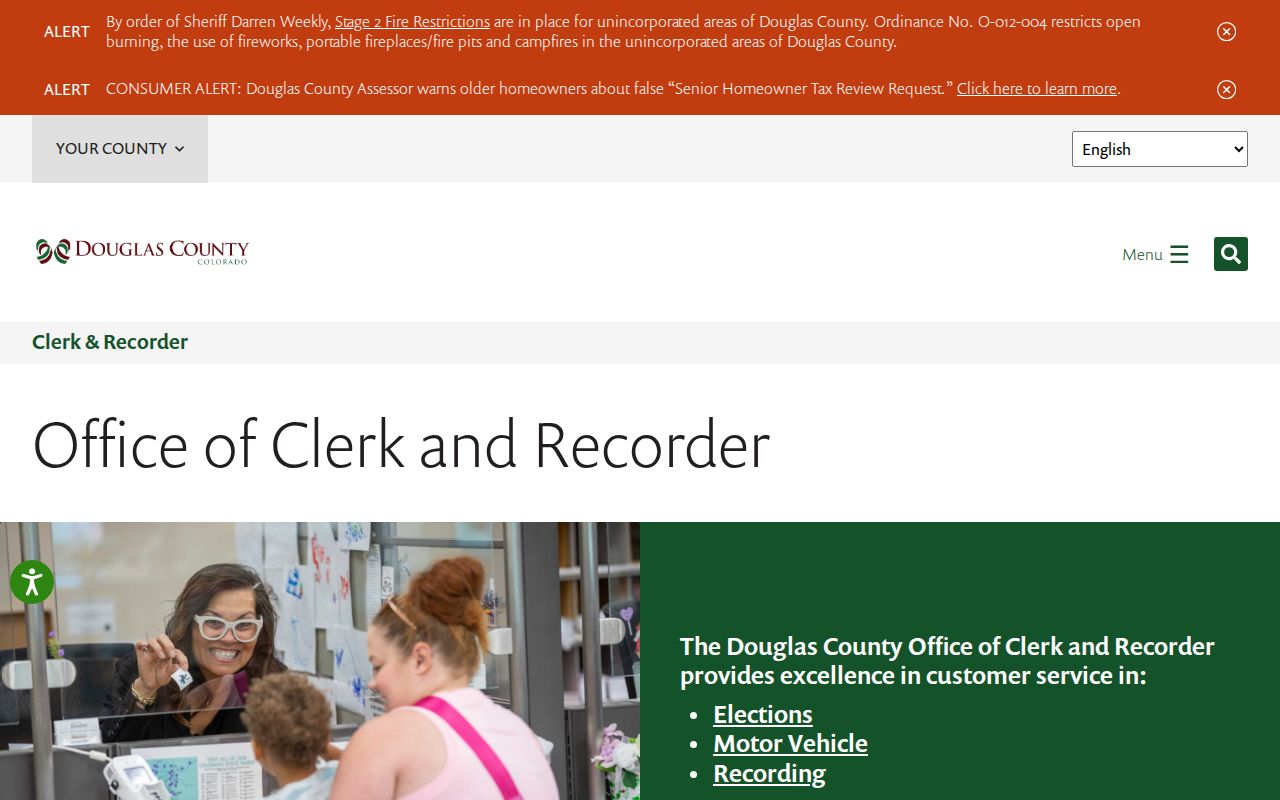
The office split matters when a result needs a certified copy or a correction. An online index can point to a record, but the keeper controls copies, redactions, fees, and staff help. A useful residents directory trail records the source, search mode, and whether the result is an index entry, image, summary, or request-only file.
Use the office card that matches the record. Do not infer that one public index includes records held by another agency.
Douglas County Assessor Search Fields
The Douglas County Assessor Property Search is the fastest current parcel-to-name route. Its standard interface separates the search scope from the term. Select a mode first, then enter an owner, address, account, or state parcel value. A broad address result should be sorted and checked one parcel at a time.
The Assessor's two address fields must stay separate. The situs or property address identifies where the parcel sits. The owner mailing address is where tax correspondence goes and may be outside the parcel or county. The card can also contain legal description, values, sales, improvements, tax districts, and map links. It is strong property evidence, not a complete resident directory.
| Field or Control | Type | Required | Douglas County Format or Use |
|---|---|---|---|
| Search scope | Dropdown | Yes | All, Search All Fields, Address, City, and Zip Code, Owner Name, Account Number, or State Parcel Number |
| Search County Properties | Text | Generally yes | Examples shown include 123 Main or John Smith |
| Sort | Dropdown | No | Best Match, Account, Owner, or Address |
| Result disclaimer | Acknowledgement | Before detail | The Assessor disclaims accuracy, completeness, warranties, and liability |
Advanced criteria add owner, property address, city, ZIP Code, state parcel, sale, improvement, subdivision, tax authority, and map-related fields. The dynamic app can produce reports such as Property Ownership and Location, Parcel Value, Property Improvement and Occupancy, and Valuation History. A custom staff report is listed at $50 per hour with a one-hour minimum, while the basic search is free.
For visual orientation, the Assessor Property Search screen shows the county's owner, address, and sorting choices.
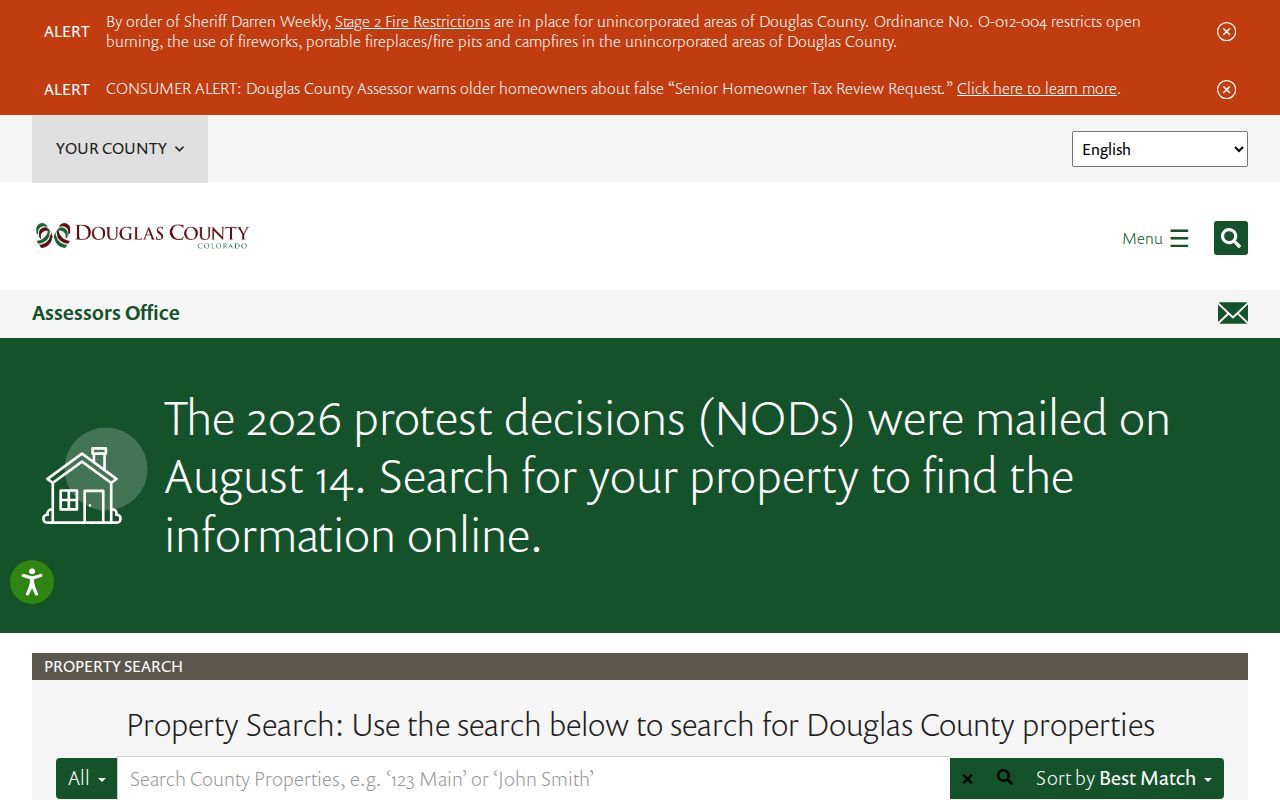
The search fields make the Assessor a useful first stop for a Douglas County residents directory, but the disclaimer and the owner-versus-situs split should travel with every copied result.
A property detail can also connect to sales or neighborhood context. Those links help date a parcel's administrative history; they do not turn comparable sales into a list of people.
Douglas County Deeds Since 1866
Landmark Web is the deed and instrument trail behind a property search. The visible choices include Name Search, Document Search, Book/Page Search, Consideration Search, Record Date Search, Reception Number or Instrument Search, Legal Search, and Quick Search. Name indexing uses “Last Name, First Name.” A legal description, lot, block, subdivision, reception number, or book and page is usually more stable than a street label.
Douglas County's June 16, 2026 preservation announcement reports 3,877,662 unique public records scanned, indexed, and online, with land records reaching back to 1866. The recording kiosk still states that 1994-present images are viewable through the online or county-computer path and that older material can require microfilm, Image Express, Book/Page work, or an office research station. Index reach and image availability are separate facts.
Search a current owner as grantee, capture the grantor, then search that earlier party as grantee in the prior period. Repeat with the legal description and a one-to-five-year date window. Deeds of trust, releases, quitclaims, entity transfers, estate deeds, plats, and easements can branch the trail. Recording copies and certifications have separate fees, so an index result is not the same as a certified document.
Landmark Web can show a reception or instrument number, recording date, document type, grantor, grantee, legal description, book or page, cross-reference, consideration when indexed, and image status. The system's reliability waiver is a reminder to verify the record with the Clerk and Recorder before relying on a chain of title.
A deed search adds an ownership timeline to a Douglas County residents directory, while a court or voter result answers a different question. Keep the record purpose visible in notes.
Current Douglas County Resident Sources
Current sources look like directories, but their coverage differs. The Assessor covers property ownership and parcel facts. Elections publishes voter products with protected fields removed. Landmark Web indexes parties to recorded instruments. DORA and the Secretary of State identify professional or business affiliations. Public association pages show a neighborhood contact layer, not a public member roster.
| Source | Who or What It Covers | Keeper | Access Note |
|---|---|---|---|
| Assessor parcel card | Owner, mailing address, situs, parcel, legal description, values, sales, improvements | Douglas County Assessor | Free current search with a detail disclaimer |
| Standard Voter List | Public registered-voter fields allowed by current election rules | Douglas County Elections | Updated every business day; protected fields excluded |
| Master Voter History | Participation and method after election certification | Douglas County Elections | Product and timing follow certification rules |
| Landmark Web index | Grantors, grantees, recorded instruments, legal descriptions | Clerk and Recorder | Index and image access vary by record |
| License lookup | Profession, credential, status, number, and possible discipline | Colorado DORA | Free public lookup; current public fields only |
| Business database | Entity name, status, agent, office, and filing history | Colorado Secretary of State | Free summary search; registry disclaimer applies |
Official records and commercial people-search services have different source chains. A private service may combine public fragments, but it does not become the custodian of a Douglas County record. Compare the categories before choosing a route for a family, property, or civic question.
| Comparison | Official Douglas County or Colorado Record | General Commercial People-Search Category |
|---|---|---|
| Source | Named county, state, court, library, or archive custodian | Compiled public fragments and vendor-held copies |
| Search basis | Defined fields such as parcel, party, voter match, license, or case | Vendor search fields and variable matching rules |
| Result meaning | A limited record entry with a stated public purpose | A lead that may blend dates, places, or names |
| Verification | Return to the named custodian for the current record or certified copy | Confirm every important fact with the underlying office |
| Lawful use | Follow the record's access rules and personal-use limits | Read the service terms and do not treat a compilation as official proof |
The Douglas County voter-list page is the operational source for update cadence and excluded fields.
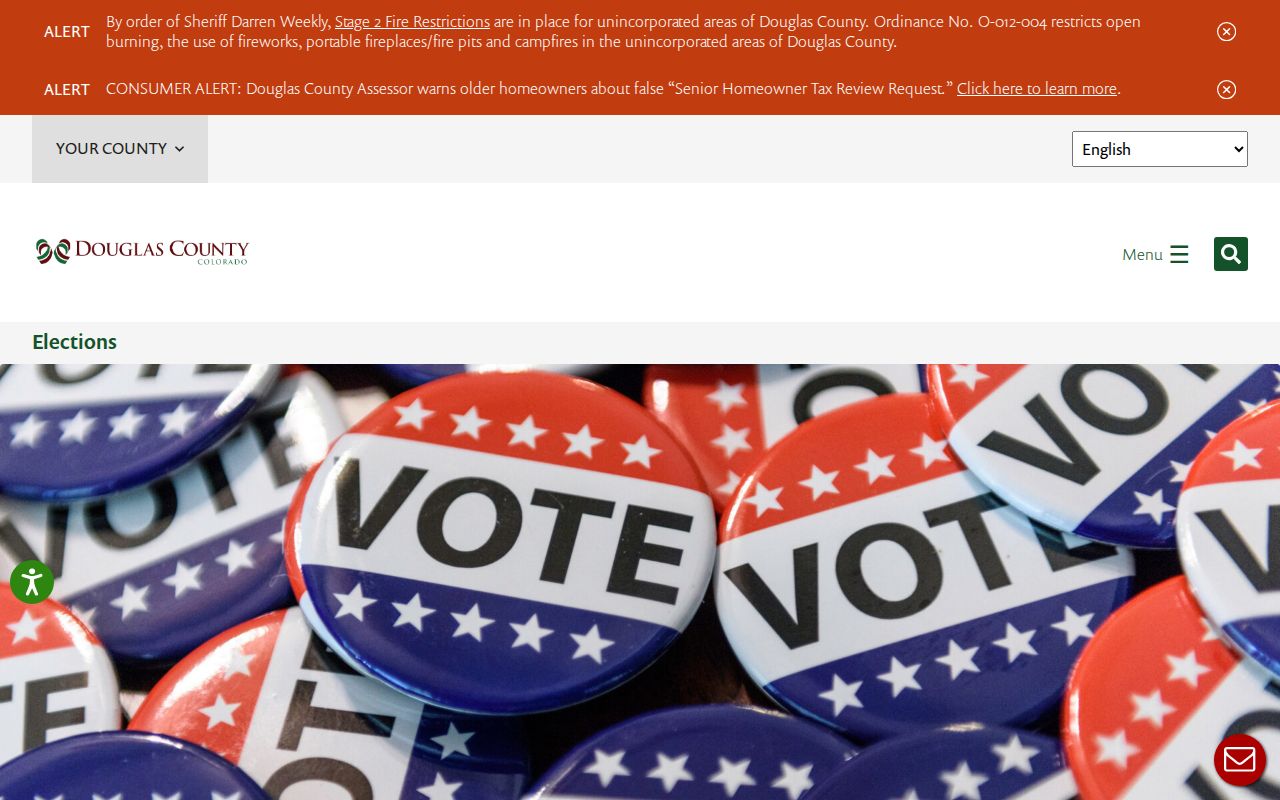
The table shows why a residents directory is a set of linked clues. It does not show every occupant, every voter, or every person connected to a parcel. Use the official page for the current product before saving a copy.
Community sources add another layer. Castle Rock maps more than 150 neighborhoods. Highlands Ranch Community Association maps 94 delegate districts by address. Castle Pines and Lone Tree publish association contact routes with warnings that private data can be missing or outdated. These pages can identify a boundary or contact, but they do not supply a public household roll.
Colorado Voter Lookup Boundaries
The Colorado Online Voter Registration Lookup is a confirmation tool. It asks for first name, last name, ZIP, and birthday, with exact-match guidance. The state page says to try a prior home ZIP after a move and to contact the county Clerk and Recorder if the ordinary lookup fails. Confidential voters and protected preregistered people may not appear in the public result.
Douglas County's Standard Voter List is updated every business day. Public products can contain voter ID, name, residential and mailing address, year of birth, party, status, and jurisdiction fields as allowed by current rules. The county excludes confidential voters, preregistered protected persons, SSN, driver-license or ID numbers, electronic signatures, email, full birth date, and how a person voted. Master Voter History follows certification and records participation or method, not ballot choice.
The statewide data-request form is a separate channel. It asks for the requestor and delivery details, selected reports, dates, copies, payment, and pickup or mailing instructions. Listed products include EX-003 registered voter data, EX-002 master history, CE-036 UOCAVA, CE-068 ballot records, CE-068c returned ballots, CE-077 rejected cures, and CE-037 undeliverable records. The November 2024 form lists $50 per report and a $1,000 2025-26 cycle subscription, with first-class delivery generally within 72 hours depending on the request.
A voter entry can support a lawful civic or family-history check, but it should not be republished as a street roster. Douglas County Elections lists 125 Stephanie Place, Castle Rock, Colorado 80109, 303-660-7444, Monday through Friday, 8 a.m. to 5 p.m. for county contact.
Douglas County Courts and Vital Custodians
Douglas County Combined Courts serve the 23rd Judicial District. The Colorado Judicial Branch docket search is limited, but it can filter by judicial district, county, courthouse, division, date, case year, class, sequence, party name or business, and attorney name or bar number. A docket result is a summary, not the complete case file. Castle Rock, Parker, Lone Tree, and Castle Pines municipal courts are separate custodians for their own ordinance, traffic, parking, animal, and misdemeanor matters.
The official court-record request form is the next channel when a file or document is needed. It captures requestor contact fields, case number, document categories, certified or exemplified copy choices, fees, and possible ID requirements. The Judicial Branch gives a three-business-day response target unless circumstances extend the work. Juvenile, sealed, suppressed, adoption, probate, and other protected material may be restricted.
Vital records follow a different path. The Douglas County Health Department handles Colorado birth and death certificates. The Clerk and Recorder handles marriage and civil union copies. The district court clerk holds divorce, legal separation, and annulment case records, while CDPHE supplies the statewide vital route. C.R.S. 25-2-117 makes vital statistics confidential and requires a direct and tangible interest for a certified copy. No general public name index or automatic age-based opening period was located.
For family history, an eligible applicant still needs the right application, ID, relationship or legal-interest proof, and current fee. Court, marriage, birth, death, and divorce references in a residents directory must therefore state which custodian can actually issue the record.
Douglas County Library History Shelf
Douglas County Libraries Archives and Local History is the strongest local fallback when a current search has no useful result. Its research guide identifies phone books, yearbooks, obituary and biography files, clippings, newspapers and magazines, business and organization records, maps, photographs, family histories, oral histories, cemetery material, and school or church records. The collection can connect a name to a place or time without pretending that every item is digitized.
The Reading Room is at 100 S. Wilcox Street in Castle Rock. Listed public hours are Monday and Friday, 8 a.m. to 4 p.m.; research help is by appointment on weekdays from 8 a.m. to 4 p.m. The guide gives 303-688-7730. Most material is staff-retrieved. Pencil-only handling, one box or folder at a time, limited seating, and fee-based microform copying shape an in-person visit.
The Douglas County Libraries Archives visit information also points to digital collections with school yearbooks, oral histories, local documents, and photographs. FamilySearch catalogs the XL New Denver Suburban Directory publication from 1927 forward, with verified 1957 and 1961 entries. The catalog is regional, not a confirmed Castle Rock-only scan. The State Archives finding aid adds assessment, deed, court, probate, marriage, election, and school runs.
An old directory entry can show a name, address, phone, exchange, business or occupation, spouse notation, organization role, or a street index clue. Pair it with a census, obituary, deed, or probate file. The Douglas County city directory material gives the historical shelf its own careful treatment.
Douglas County License and Business Trails
A name can also surface through an affiliation record. The Colorado Secretary of State business database accepts business name, trademark, trade name, ID number, or document number searches. A result summary may show entity name, status, formation date, jurisdiction, principal office, registered agent, and filing history. The registry's own disclaimer matters: an entity summary is not a finding that a business is legally operating.
DORA's public license lookup uses Profession, First or Middle Name, Last Name, License Type, License Number, and License Status. A trailing asterisk supports a partial-name search. Results can include credential status and discipline. A license is an affiliation or credential clue, not proof that a person lives at a Douglas County address.
The Great Colorado Payback search is another name trail. Searchers can try a name, business, organization, former name, or former ZIP. A possible match begins a claim process; it does not prove current residence.

The State Treasury search is useful when an old name or ZIP points to property held by the state. Keep the claim proof and the directory clue as separate steps.
The Colorado professional license lookup shows the public field choices for a credential search.
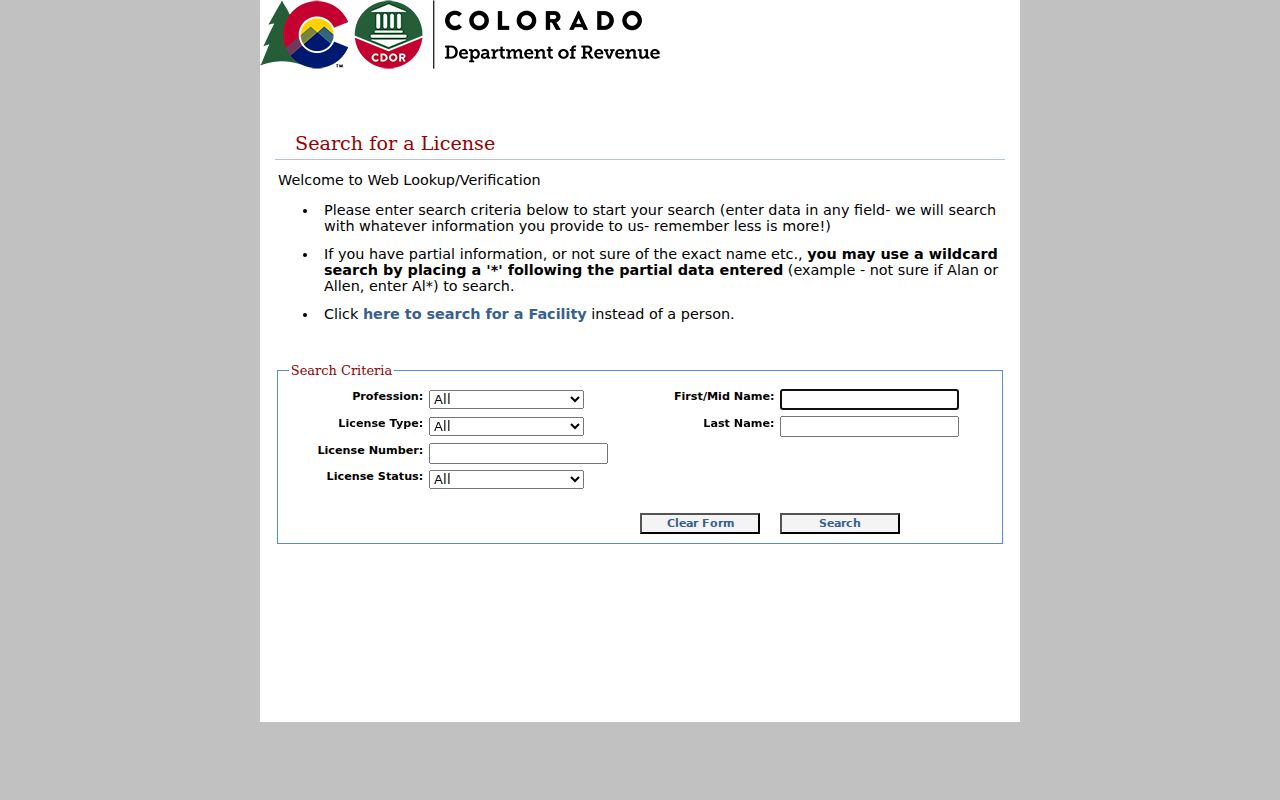
License status, business filings, and property records come from different custodians. Matching a name across them works best when the city, parcel, business ID, license number, or date also agrees.
The Colorado registry of sex offenders is a separate public-safety product with its own update cadence, categories, and legal limits. It is not a complete criminal-history list and should never be treated as a general resident index.
Colorado's public registry search displays the official route rather than a private name compilation.
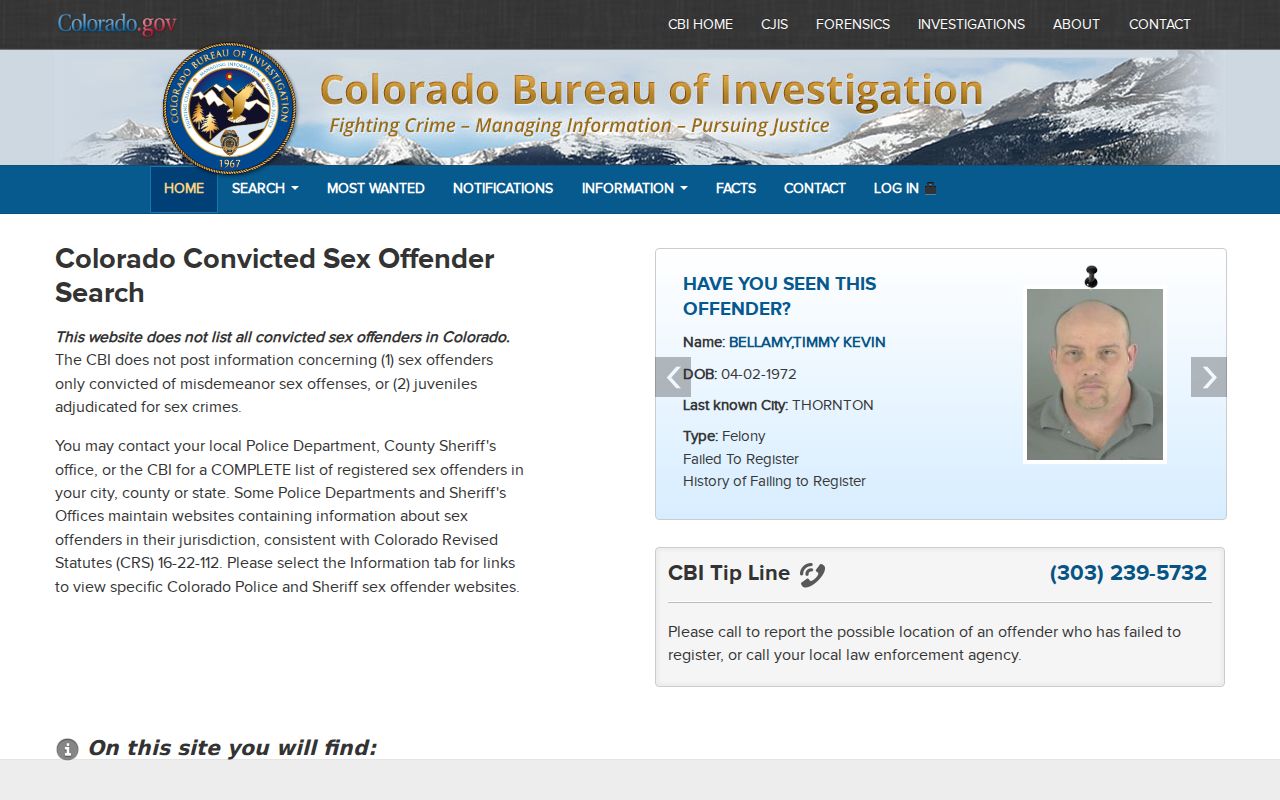
The result is a narrow record trail. A residents directory should label the source and avoid turning a license, business, unclaimed-property, or registry result into a claim about residence.
Douglas County ZIP and Population Clues
The county's 2024 health summary lists an aggregate population of 394,030, with 4,156 births and 2,081 deaths. Those numbers describe the county, not named residents. They help set scale, while the 14 core ZIP areas help set geographic scope. Castle Rock, Castle Pines, Highlands Ranch, Lone Tree, Parker, Franktown, Larkspur, Louviers, Roxborough Park, Sedalia, and rural areas do not all share the same postal or municipal label.
ZIP is a filter, not a legal boundary. Highlands Ranch is unincorporated and often uses a Littleton postal label. Castle Pines can carry Castle Rock postal context. Parker ZIP areas reach beyond the Town line. The Assessor offers Address, City, and Zip Code mode and an advanced ZIP Code criterion. The county ZIP map is dated April 29, 2021, so an exact address should be checked through USPS ZIP+4 verification before a postal value is joined to a parcel or resident record.
Keep postal city, ZIP, situs address, owner mailing address, legal description, municipality, subdivision, and county as separate fields. That simple habit prevents a Douglas County residents directory search from assigning a person to the wrong jurisdiction.
CORA When Douglas County Portals Stop
The Colorado Open Records Act, C.R.S. 24-72-201 through 24-72-206, is the fallback for a record held by Douglas County or a city but not exposed through a search screen. Any person may submit a written or electronic request. Name the department, record type, address, parcel, project or case number, parties or keywords, date range, and desired format. A narrow request gives the custodian a workable search.
Douglas County says the response starts within three working days, counted from the day after receipt, with notice possible for an extension of up to seven working days. Research, retrieval, copying, and permitted fees may apply. CORA does not override vital-record confidentiality, protected voter fields, juvenile or sealed court rules, adoption limits, or protected personal identifiers.
The Douglas County CORA request page gives the local procedure and department routing.
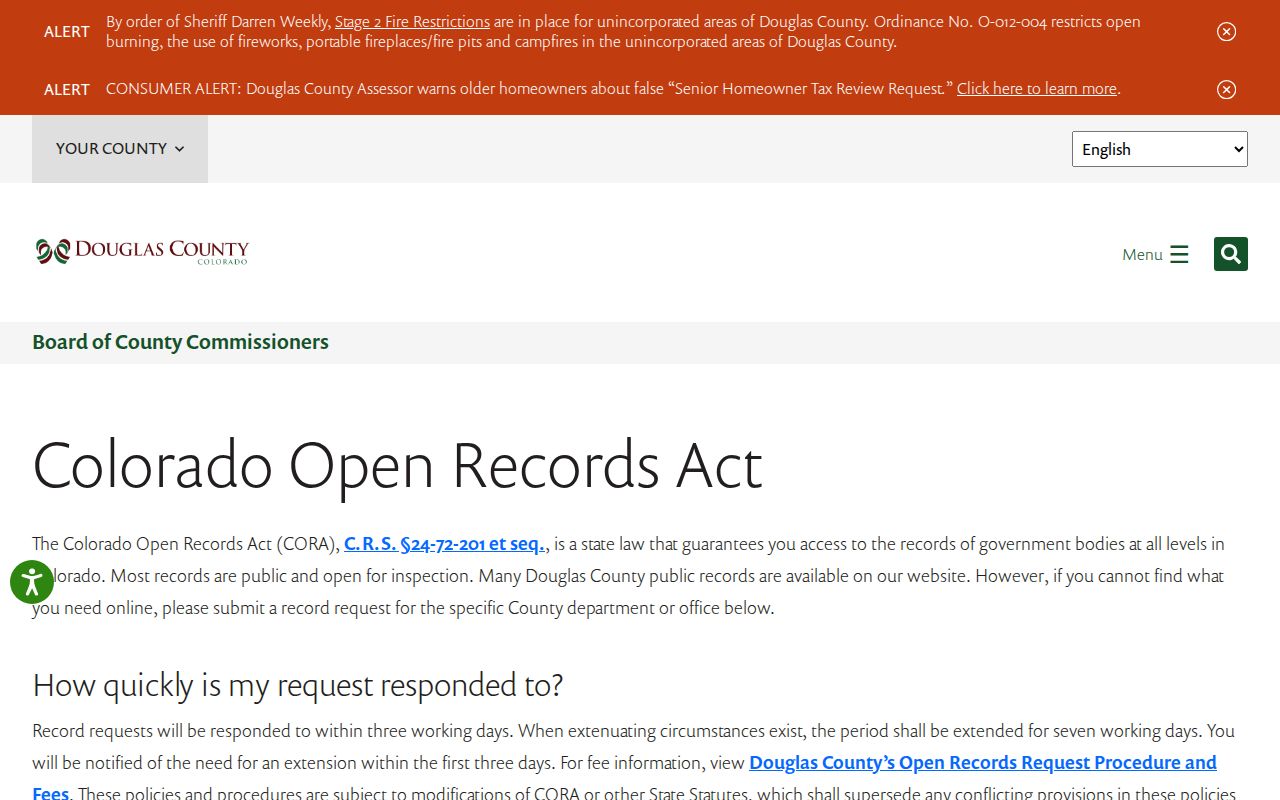
A CORA request is a records-access channel, not a promise that every requested field is public. The custodian can redact or withhold material under a specific exemption and can ask for clarification when a request is too broad.
Lawful personal use. Use Douglas County records for family history, estate work, property research, reconnecting, or civic inquiry. Do not use a name or address result to stalk, harass, intimidate, or publish a protected address.
Earlier Douglas County Directory Evidence
Historical Douglas County residents directory work is strongest when several modest clues are paired. DCL phone books and yearbooks may show a name, address, school, phone exchange, or organization. Obituary and clipping files can add relatives, former addresses, a cemetery, or an estate clue. The regional XL directory catalog begins in 1927 with verified 1957 and 1961 entries, but no official source located a complete Castle Rock or Parker city-directory run or a verified local reverse-directory year range.
State Archives finding aids fill other gaps. Douglas County marriage records begin in 1864, election records run from 1876 into the twentieth century, assessment material includes an 1869 tax roll and later assessment books, and probate and court series cover multiple historical periods. A federal census household is released under the National Archives 72-year rule. A directory subscriber, census household, deed party, and taxpayer remain separate observations.
Directory years also need place care. Frankstown was an early county-seat community. Castle Rock became the county seat in 1874 after the eastern part of the county became Elbert County. A nineteenth-century record may use a rural post office, ranch name, or earlier locality instead of a current postal city. Those names can be the key that makes a historical residents directory search work.
For the shelf details, request the community, approximate year, publication type, and street or name index from DCL rather than assuming a familiar national directory title.
Douglas County's Courthouse Records Story
Douglas County was formed in 1861. County history describes an original area stretching from the Platte River to the Kansas border, followed by the 1874 creation of Elbert County from the eastern portion and the move of the county seat to Castle Rock. The 1889 courthouse was built with native rhyolite and destroyed by arson in 1978.
The research does not identify which individual books were lost or rebuilt in that fire. The surviving State Archives finding aid is therefore the useful next clue. It lists assessment, tax, deed, court, probate, marriage, election, school, naturalization, and coroner series by record group and call number. A gap in an online directory is not proof that a local record never existed.
The later record story is just as important. County recording materials describe online images from 1994 forward, older research-station and microfilm paths, and a June 2026 digitization project that indexed land records back to 1866. Current permit archives reach back to 1978, while voter products refresh on their own election schedule. A Douglas County residents directory is a time line of custodians, not one unchanged database.
Privacy Rules for Douglas County Records
Colorado access rules leave clear gaps in a public residents directory. Vital statistics are confidential under C.R.S. 25-2-117. Juvenile, sealed, suppressed, adoption, and protected court material can be restricted. DMV address and identity data are protected under the federal Driver's Privacy Protection Act. Voter products exclude confidential voters, protected preregistration records, signatures, email, full birth date, ID numbers, and ballot choice.
The Colorado Address Confidentiality Program uses a substitute address and mail forwarding for qualifying protected people. The actual address remains protected, and the ACP cannot replace the real property description in a recorded document or property assessment. Colorado confidential-voter handling is separate. HB25-1195 created a first-responder and spouse voter address-confidentiality route effective January 1, 2026.
Record terms.
- Roll
- An administrative list, such as an Assessor property roll or voter product, built for a defined public purpose.
- Index
- A finding aid that points to a record or instrument; an index entry may not include the complete image.
- Parcel
- A mapped property unit joined to an account, state parcel number, legal description, or tax record.
- Criss-cross directory
- A historical reverse directory organized around an address or street clue rather than only an alphabetical name.
Privacy does not erase every public record, and a public record does not grant permission to republish a person's address. Verify a result with the custodian, respect protected fields, and stop when the record cannot lawfully answer the question.
That boundary is part of an accurate Douglas County residents directory, not a footnote added after the search.